Anyone around a track will often see visitors from other sports including rugby, boxing and a high amount of academy prospects told to “get quicker” by coaches in football

It makes sense as speed has become an ever present key performance indicator for professional football across Europe so going to the labs across the UK makes sense tapping into those that harness speed concepts and conditioning on a regular basis but who also aren’t beholden to a club offering an athlete freedom to explore and express their interest in their physical development taking positive control in their journey
Yet not everyone is sold on straight line speed training
Over the past few years journal articles, sports scientists and sports coaches have bashed the concept and in some respects rightly so (let me explain)
Football, rugby, basketball, field hockey as examples involve 100’s of movement variations and although acceleration and max velocity but also require athletes to be aware of where they are in the game and then adjust rapidly to either evade opponent’s or create space to aid their team
Terms like curved running, breaking forces, penultimate steps and change of direction defecit muddy the water for athletes and their support teams around whether they should enlist an athletic performance coach

These are all key facets for Sports and should not be ignored so what are they:
- Curved running – is what it says on the tin, some have claimed this is as if not more relevant than linear sprint speed
- Breaking forces and penultimate step – this looks at the ratio between being able to create movement (acceleration) and to slow down (deceleration) and the influences eccentric strength and torso control have on success – Paul Jones, Tom Dos Santos and collaborators have written extensively on this
Why is Track training beneficial then? Is it not just about developing linear (straight line) running speed?

Track develops movement variability, athleticism, physical capability and self discipline but what do I need for better straight line speed?
Movement literacy
Many coaches, specialists and so on bash drills you will see but we can sometimes get bogged down with if they exactly mirror what’s needed, constantly striving towards the SAID principle in stark contrast to other concepts like dynamic correspondence

Track and Field Athletes buy into developing their body over months and years for one singular moment of excellence, other athletes don’t have that luxury or dedicate that kind of time
Drills and movement training becomes part of a micro dosing routine physically and a mental switch and drive psychologically building towards athletic development, if you spent 20 minutes 3 times per week that’s an extra hour of training each week developing
- Coordination
- Mobility
- Reactivity
- Power/Speed
- Strength
But that’s not all, having an athletic approach to your training meets several physical needs associated with field sports as we’ve established

Creating shapes relevant for running is key involving a neutral pelvic position (not rigid), positive front knee position, backside leg retraction, ankle dorsiflexion

Projection
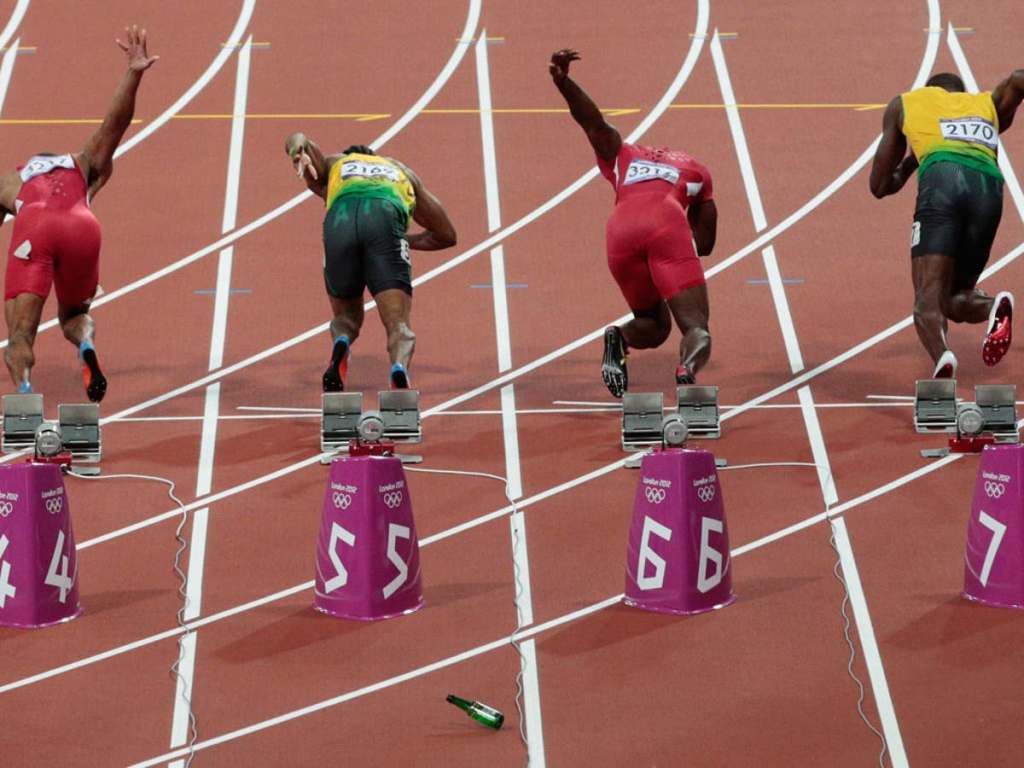
Projection is the ability to rapidly move yourself in a particular direction, akin to acceleration but specific to sprinting and the idea is to create space between where you start and where you want to move to and this can be advantagous to field players because although straight sprints only go in one direction the first step or two actually have a great deal of lateral movement
Reactivity
This is all about managing the collision with the ground when your foot impacts it and where the energy goes, for speed at any level its all about harnessing stiffness and levers through the body having a strong-stiff ankle complex that can handle forces upwards of nearly 200x bodyweight
Switching and fluency
This requires the legs to fire out into a figure 4 and drove the track or turf away behind you but then rapidly retraction and switch positions concurrently within the blink of an eye and then repeat this over and over with little inefficiency

Speed Reserve and Speed Capacity
Running once perfectly is often the criticism of track athletes but what people don’t see is the 1000’s of sprint reps completed in training, testing and refining, like an F1 car to get the most out of the engine that you can
The concept is that athletes can then complete heats or multiple races within days at a comfortable speed and this applies to other athletes too as sprinting requires great resources and causes significant stress to muscles like the hamstrings the more we can raise the shelf and comfort running at speed the less fragile a player will be
Where do we start?
We need an assessment of the athlete to identify strengths, weaknesses and gaps to build their training In
Interested? Use the button below
 Built for Speed